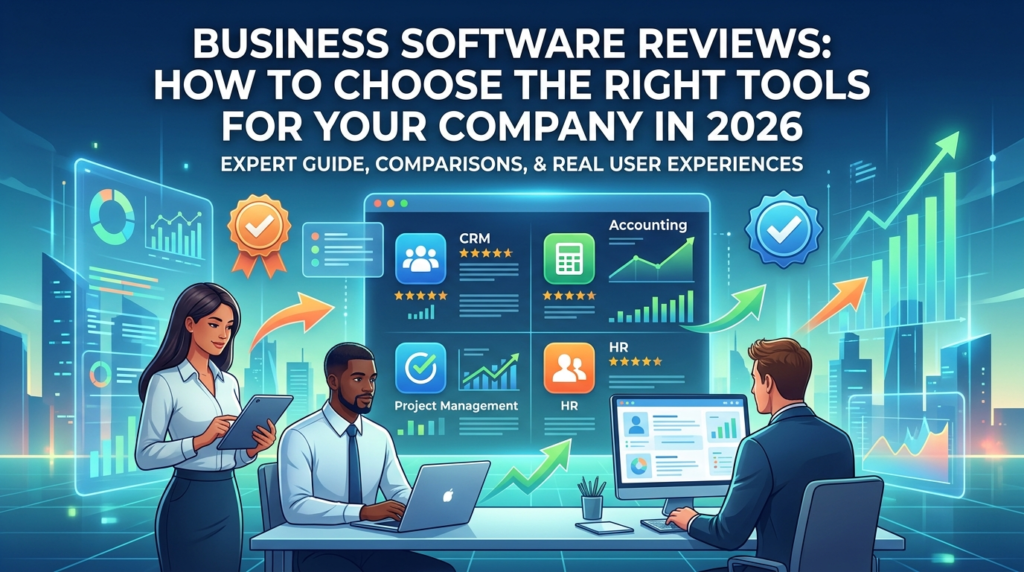

Business Software Reviews: Why They Matter
In today’s digital world, businesses rely heavily on software to manage daily operations, improve productivity, and serve customers efficiently. From accounting platforms to customer relationship management (CRM) systems, choosing the right software can significantly impact business growth.
This is where business software reviews become essential. They help companies understand the strengths and weaknesses of different solutions before making a purchasing decision.
A well-informed choice can save money, increase efficiency, and prevent costly mistakes that arise from investing in unsuitable tools.
What Are Business Software Reviews?
Business software reviews are evaluations written by users, industry experts, or technology analysts. These reviews provide insights into how software performs in real-world situations.
Typically, software reviews cover:
- Ease of use
- Features and functionality
- Customer support quality
- Pricing and value
- Integration capabilities
- Security measures
- Scalability
- User experience
Reading multiple reviews helps businesses gain a balanced perspective rather than relying solely on vendor marketing claims.
Benefits of Reading Business Software Reviews
1. Make Better Purchasing Decisions
Software subscriptions can become expensive over time. Reviews provide practical information that helps companies avoid wasting money on ineffective tools.
2. Understand Real User Experiences
Marketing materials often highlight only the positives. Reviews reveal both advantages and limitations based on actual usage.
3. Compare Multiple Solutions
Businesses can easily compare competing products and determine which option aligns with their specific requirements.
4. Discover Hidden Features
Users frequently mention useful features that may not be prominently advertised by software providers.
5. Identify Potential Issues
Reviews can highlight concerns related to bugs, support responsiveness, or performance problems before you commit.
Categories of Business Software Worth Reviewing
Customer Relationship Management (CRM)
CRM software helps businesses manage customer interactions and sales pipelines.
Popular options include:
- Salesforce
- HubSpot CRM
- Zoho CRM
- Pipedrive
When reviewing CRM software, focus on automation capabilities, reporting tools, and ease of use.
Accounting Software
Accounting platforms simplify bookkeeping and financial management.
Key factors to evaluate include:
- Invoice generation
- Tax compliance
- Expense tracking
- Payroll support
- Financial reporting
Common choices include QuickBooks, Xero, and FreshBooks.
Project Management Software
These tools improve collaboration and task organization.
Look for features such as:
- Task assignments
- Team communication
- File sharing
- Time tracking
- Progress reporting
Popular examples include Asana, Trello, and Monday.com.
Human Resource Software
HR solutions streamline employee management processes.
Important review criteria include:
- Recruitment tools
- Attendance management
- Payroll processing
- Employee self-service portals
- Performance tracking
Marketing Automation Platforms
Marketing software enables businesses to automate campaigns and engage customers effectively.
Consider reviewing:
- Email marketing capabilities
- Lead nurturing tools
- Analytics dashboards
- Integration options
- Segmentation features
How to Evaluate Business Software Reviews
Not all reviews provide equal value. Here’s how to identify trustworthy information.
Check Multiple Sources
Avoid basing decisions on a single review. Reading feedback from various platforms offers a broader understanding.
Focus on Detailed Reviews
Comprehensive reviews explaining specific experiences tend to be more reliable than short comments.
Consider Business Size
Software that works well for large enterprises may not suit small businesses or startups.
Look for Recent Feedback
Software evolves quickly. Recent reviews reflect current features and performance.
Identify Common Themes
If numerous reviewers mention the same strengths or weaknesses, those observations are likely accurate.
Common Mistakes Businesses Make
Many organizations rush into software purchases without adequate research.
Some common mistakes include:
- Choosing based solely on price.
- Ignoring scalability needs.
- Overlooking customer support quality.
- Failing to test free trials.
- Not checking integration compatibility.
- Depending only on vendor claims.
Avoiding these errors can lead to better long-term results.
Tips Before Purchasing Business Software
Before making your final decision:
- Define your business requirements clearly.
- Establish a realistic budget.
- Request product demonstrations.
- Take advantage of free trials.
- Involve team members who will use the software.
- Review security and compliance standards.
- Compare at least three alternatives.
A strategic evaluation process minimizes risk and improves satisfaction.
Final Thoughts
Reading business software reviews is one of the smartest steps businesses can take before investing in new technology. Reviews provide practical insights that marketing brochures simply cannot offer.
Whether you’re searching for CRM tools, accounting solutions, project management platforms, or marketing software, taking time to analyze user feedback can help you choose solutions that align with your goals.
The right software not only enhances productivity but also supports long-term business growth. By relying on credible business software reviews and conducting thorough research, companies can confidently invest in tools that deliver genuine value.